 |
 |
 |
 |
 |
Volume
5 - Issue 06
JUNE 2007 |

|

 |
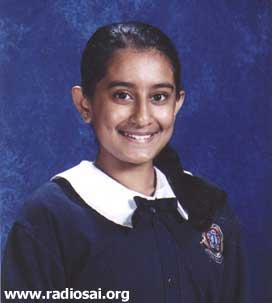
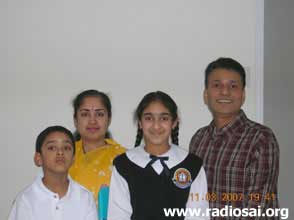
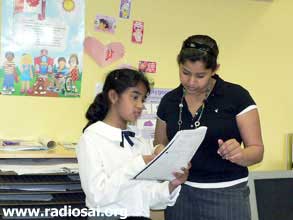
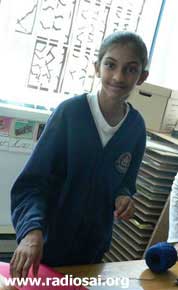
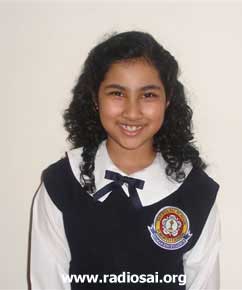
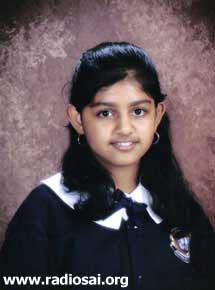
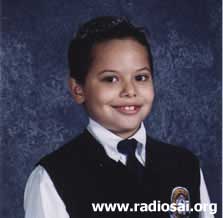
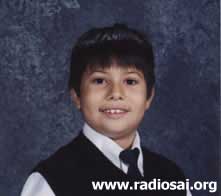
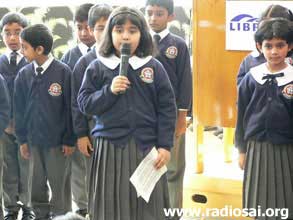
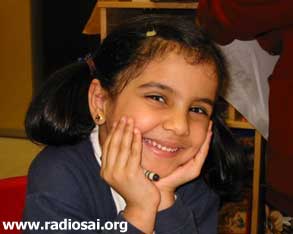
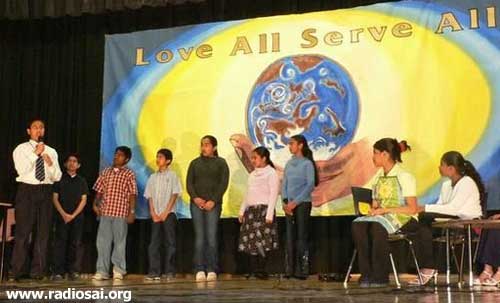
Anyone familiar with the life and challenges of a typical Grade 6 student in a North American school is likely to dismiss the above confession as a myth or a utopian fantasy. Some may define it as a concoction of someone’s wishful thinking; yet others may consider it to be every educator and parent’s dream, and quite understandably so. The realities of a typical 11 year old girl’s school life in North America tend to be a stark contrast to the above confession, and the experience is universal, be it in California or Calgary, Tulsa or Toronto. The issues more likely to dominate the “tween” scene are peer pressure, stress, low self-esteem, poor body image, weak impulse control, rebelling against parental and teacher authority, excessive TV, internet and cell phone dependency, obsession with clothes, make-up and may even include anorexia, bulimia, and experimentation with substance abuse – a far cry from the wishful reflection above. Yet, there is a very real girl named Prarthana Tirikollur and the utopian scenario painted above is no myth for her. It is indeed a page from her life, her experience and her truth. And yes, she lives in a North American metropolis. It is her reality.
Given the state of our world, it is not surprising that one of the great conversations of our times has centered on the issue of education, its aim and purpose. Recognizing the poverty and stark disparities around us as symptomatic of the systemic decay in our values, stemming largely from ignorance, greed and insensitivity towards others, policy pundits in North America and elsewhere have been calling lately for the renewal of ethical commitment and deepening of the spiritual sense among all people.
Shocking incidents such as the recent massacre at Virginia Tech or the Columbine high school killings a couple of years ago in the USA send educators scrambling to the drawing table, seeking solutions for a system that is increasingly failing to deliver. Some of the buzz words emerging as possible solutions from this animated dialogue are “character education” or “values-based learning”, “environmentally sustainable development” and “carbon footprints”. Recently, Canada’s largest province, Ontario appointed a special task force to oversee the development and implementation of the province’s Character Education program for Ontario’s public schools and to develop appropriate teaching aids and methodologies, a move received warmly by observers and parents. While some see it as the government’s response to the growing problems of indiscipline, bullying, racism and such in Ontario schools, others point to Character Education as the key to making Ontario’s schools relevant to the current reality and its challenges.
As we strive to progress in a world that has shrunk into a global village with economic interdependence, as well as social and racial osmosis, cultural sensitizing is now the critical driver to harmonize diverse peoples and aspirations and to ensure what emerges is not chaos, but a fragrant potpourri. Business magnets today are waking up to the realization that Character Education makes good business sense in a world where corporate conglomerates are more multicultural than ever before. Political leaders are realizing that a values-based, tolerant, environmentally responsible and transparent work ethic and an equitable work environment are the keys to both, political longevity and long term profitability. Suddenly, being smart is not enough. Good is in, and the term ‘character’ has a ‘cool’ ring to it! A policy paper entitled “Finding Common Ground” published by the Ontario Ministry of Education, states:
While the government initiatives aimed at reviving the place of values of acceptance and tolerance in the school systems in North America are still in their infancy, it was way back on November 17, 1999 that Swami approved the founding of the very first school in North America that would specialize exclusively in Character Education. It was to be set up in Toronto, Canada – a school whose motto would sum up the Sri Sathya Sai philosophy of education, namely “the End of Education is Character”. For all the activities in the school, the following advice from Swami has become the eternal guide :
While Canadians embarked into the 21 st century with the first Sathya Sai School in North America taking shape in a Toronto suburb, the Sathya Sai Education in Human Values (SSEHV) program had, in fact, already been successfully implemented in Canada and elsewhere in the world for over three decades by then, encouraging millions to live selfless lives, helping, loving and serving anyone in need, inspired by the personal example and teachings of Baba.
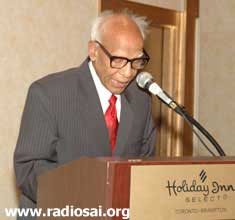
Dr. V. P. Singh, the Central Coordinator of the Sri Sathya Sai Baba Organization in Canada and Chairman of the Sathya Sai School Trust, points out that “SSEHV classes were being conducted across Canada at Sai Centres and in some public schools, many years before the Sathya Sai School of Canada was established in the year 2000. Training of teachers in Education in Human Values (EHV) is continuing, with the aim to bring awareness of the eternal human values into the public school system. School boards and other educational institutes are also being contacted and informed of the SSEHV program. Presently, in Canada there are large numbers of volunteers who are dedicated to serving humanity and propagating Sri Sathya Sai Baba’s message of Human Values.”
Going down the memory lane, Dr. Singh recalls, “In the year 1999, Swami answered our prayers to start the school in Toronto. He blessed the school and gave specific instructions as to how the school should function. His instructions were clear - the education in the school should be based on the Human Values of Love, Truth, Peace, Right Conduct and Non-violence. The Sathya Sai School is unique as it combines the standard curriculum offered by the provincial school boards along with character building human values education. It teaches the mind and reaches the hearts of the children.”
“I bless you and the project. I am always with you,” Swami had said while approving the setting up of the Sathya Sai School of Canada. He had further added, “Land and building do not make a school. It is the children who make a school... First, start small, and then grow big. Yes, the school is my project. I will protect and bless you...”
Recalling that blissful morning of November 17, 1999, Mr. Dayal Mirchandani, President of the Sri Sathya Sai Education Trust of Canada, says, “When He called me into the interview room, He said, ‘I am always with you, make this happen and take charge’. He then asked me to open my mouth and with His divine hands, fed me a clove and then granted me padanamaskar.” With His guaranteed blessings, the school blossomed.
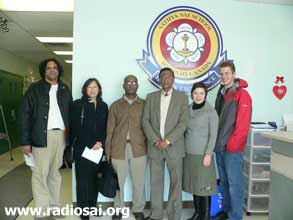
It is interesting that Baba chose Canadians, the peacekeepers to the world, the nation with the longest unguarded borders, safe haven for displaced peoples from around the planet’s disturbed areas... “the true north strong and free” as the seat for reviving perennial values that are as old as civilization and as relevant to our lives today as love, fresh air, and life itself. Founded by a teacher of such unparalleled vision and wisdom, the Sathya Sai School of Canada was inaugurated on September 2, 2000 by Dr. Art-Ong Jumsai, the Director of the Sri Sathya Sai Institute of Education, Thailand. Within the first six years of its operation, the school attracted much attention from mainstream educators and the media, and recently it once again made national headlines for its perfect score in the province’s standardized examination, making it to the number one spot in terms of academic excellence with 15 other schools in the Greater Toronto Area and 36 others in the entire province of Ontario, out of a total of 2812 public, private and separate schools.
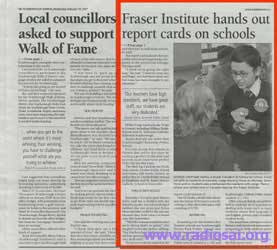
The February 14, 2007 edition of the Scarborough Mirror, a popular Toronto newspaper, ran the following front page story:
The Fraser Institute, the British Columbia based think tank, awarded the top Ontario schools perfect ten score based on Reading, Writing and Math tests administered to Grade 3 and 6 students by the province’s Education Quality and Accountability Office (EQAO). It meant every single student had met and/or exceeded the expectations of the Ontario curriculum in the province-wide standardization test.
With this superior rating, the Sathya Sai School has emerged as a key player in the field of academic excellence on the Canadian national scene. Yet, its academic success is only a part of the many laurels the school has won in its young life of a mere six years, and this ranking comes as no surprise to those who are familiar with the vision and mission of this unique school.
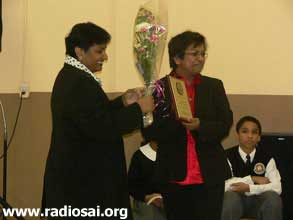
Founding Principal of the School, Mr. T.R. Pillay, believes the report validates not only the excellent work of the teachers, and the calibre of the students, but also the school's mission to balance character education with academic excellence.
If the school has become a resounding success story today, it is largely because of the highly trained and dedicated educators who serve the Sathya Sai School of Canada with unparalleled levels of commitment and sacrifice, drawing their inspiration directly from the personal example of Baba, who is not only the Founder but also the soul and the life-force of the school. Mrs. Koushi Premachandran, who has been teaching Kindergarteners since the school’s inception, explaining her program’s phenomenal results, says,
For Grade 2 teacher Mrs. Aditi Jain, every day at the school holds a surprise. She says:
The school's character education program and a values-permeated environment are greatly responsible for the students’ wholesome attitude to learning, keen sense of engagement and service to the community. Swami says, “Education is for life, not merely for earning a living”. Even as a good report card from the Fraser Institute is welcome news, it is only a part of the school’s greater goal, to promote human excellence by balancing academic excellence with character education.
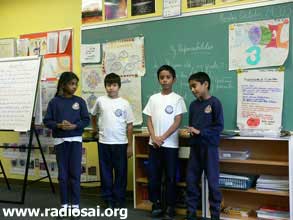
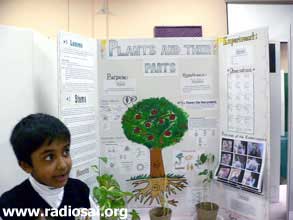
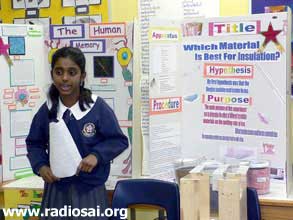
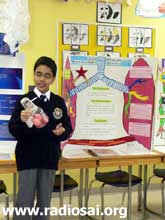
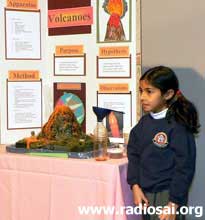
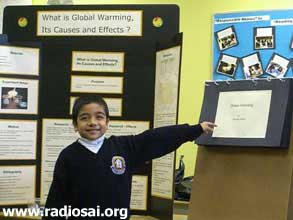
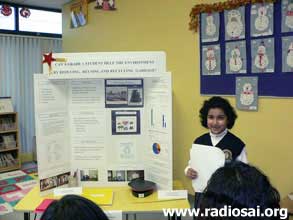
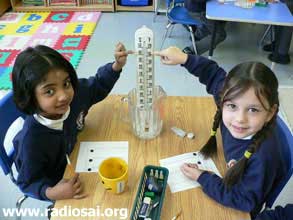
Since its inception in September 2000, the Sathya Sai School has been a pioneer in integrating values into the core academic curriculum. All members of the school’s teaching faculty have outstanding professional qualifications from leading universities in Canada and abroad as well as additional training in integrating the SSEHV program into the academic curriculum throughout the school day. One example of successful integration is the annual Science Fair. It integrates the learning of Science with the Sathya Sai Education in Human Values program while providing a perfect opportunity for family bonding, a practice highly encouraged in the school’s culture.
To know more about the Science Fair, Click here.
Grade 5 teacher Miss Tanushree Das says:
According to Michael Greenwood, Grade 6 teacher, “The teaching profession is fundamentally based on spiritual principles.” For him, “Service rendered to the students is service to Swami Himself” and teaching is not a profession, rather, “ a sadhana or a spiritual practice to realize God” which has to be done in utmost purity and sincerity. It is this enlightened attitude of the teachers which has made this school so special. Looking back at the many trails the school has blazed in the past six years, fundamentally because of its adherence to the five human values, the school’s now retired Founding Principal Mr. T.R. Pillay describes his tenure here as the ultimate high point of his career of over four decades as an educator. He left the school with a treasure trove of priceless memories. He recalls: “I shall remember the student who was asked: What is the difference between a dream and reality? And his reply: ‘They are just different levels of consciousness’. “I will treasure memories of individual achievements and individual acts of concern for fellow men. One student spelt his way to the Regional Spelling Bee Finals three times and even donated his prize money to the school. Another student showed kindness and caring when he offered his chair to a visitor who had been standing too long in his classroom or to his Principal who had dropped in to watch a class presentation. I shall remember the earnest plea of the student who wanted me to send light and love to her every morning as she was moving to another part of the province; and the student who reminded his mother who was about to punish him: ‘Hands are for helping, not hurting’”, Mr. Pillay reminiscences with pride and nostalgia.
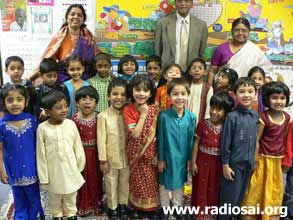
According to Principal Dr. Revathi Chennabathni, the school’s 7th annual Open House on April 4, 2007 saw the gym packed with nearly 300 interested families eager to understand the unique vision and mission of the only school in Canada and the USA that offers what may be termed a full-time “Character Immersion” program. Over 150 applications were received for 20 spots in the Junior Kindergarten program and against any possible vacancies that may arise in other classes (Senior Kindergarten to Grade 6) should any of the existing students leave the school. The school caps class size at 20 students per grade, the optimum number recommended by the Ministry of Education. With each passing year, the buy-in by potential parents continues to be overwhelming. Despite the many demands that the school’s programs place on them as partners, Canadian families are drawn to the school for various reasons.
As North American parents, we wanted our children to grow in an environment where the fundamental five human values defined the culture - values that are timeless and can be easily related to regardless of one’s culture, race, faith or religion,” say Shanthi and Bob Balakumar, parents of Alagan, in Junior Kindergarten and Paary, in Grade 1. “After extensive research, the Sathya Sai School emerged as the ideal and only choice for us. We love the atmosphere that engulfs us as we step in through the doors of the school. We appreciate and value the creative teaching methodologies used by the teachers. As well, the partnership and communication between the staff at the school and parents ensures that the children receive care and coaching almost 24/7.”
For Mullafer Shanawaz and his wife Kaushy, the draw of the school was the universal appeal of the virtues the Sathya Sai model of learning promotes.
It is a variety of facets of the school such as daily universal prayers (which are conspicuous by their absence in the public school system where even the term “God” is a taboo) to the school’s loving discipline policy, smart uniform, high academic standard, weekly yoga classes, daily tuning-in time, insistence on healthy and vegetarian food, and so on that has attracted Canadian parents. Junior Kindergarten student Dante Morris’ mom Michelle Ward admits:
Aruna and Mohan Gopal, who have been associated with the school since its inception, recalling how it all began, say,
What has made this school stand out so splendidly is its distinctive teaching methodology that is modelled on the Sathya Sai system of education. It calls for an integrated approach to learning that nurtures the mind, the body and the spirit. Based on this philosophy of educare, the school’s program aims to draw the infinite intelligence and goodness latent in every individual, using a variety of effective teaching methods. Teachers, here, specialise not in teaching a subject, rather they are experts in using the subject as a means to help the child in his or her own development. The educators principally use five teaching components:
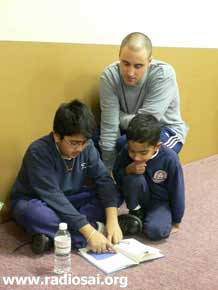
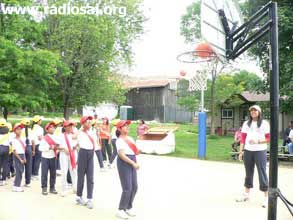
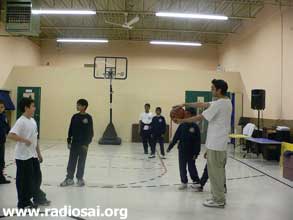
These are used to impart lessons with a variety of adaptive methodologies in two principal ways: 1) The Integral approach 2) The Direct approach The first is integration of values within the academic and extra-curricular school activities wherein specially trained teachers incorporate the human values lessons within the learning of traditional subjects such as Math, Science, Language, Social Studies and Physical Education, and also integrate the program into extra-curricular activities like clubs, playground activities, sports and field trips.
Citing an example of how this is done and what impact it has in the students minds, Mrs. Ahalya Ganesh a Grade 4 teacher, says,
While that is the tremedous impact the integration of values into the curriculum creates, there is also a second and more direct method which the educators use, wherein instructional techniques are used to teach one of the five human values. And the impression this approach leaves on the young minds is no less. The direct method utilizes all five teaching components through a number of specifically designed lesson plans, to be used directly in the classroom unlike the previous integral method which incorporates the five values into the curriculum and learning environment. This program is designed not as an attempt to dictate or impose values, but rather to provide the children with a frame of reference which they can use to inform their future decisions and behaviour. The whole endeavour is based on five basic Human Values that are universal and held in the highest esteem in all cultures, faiths and societies, namely Truth, Right Conduct, Peace, Love and Non-Violence. These are nurtured through various methods and approaches. Some examples of practicing values include:
In spite of the trememdous positive results both the integral and direct approaches have, possibly the most effective way of teaching values is by example. Teachers here are remembered for who they are more than for what they teach. If a teacher is loving and kind, then everything he/she teaches will automatically be full of values. Teaching that the composition of water is H2O is academic knowledge. Teaching the value of water and the proper way to use and conserve it is Sathya Sai Education in Human Values. Both kinds of teaching must be used together to deliver a more balanced education. Once a teacher starts to practice values in his or her life, then thinking of ways to integrate values into the classroom becomes easy. This program, in fact, offers a unique opportunity to both teachers and students. It is an opportunity to grow and develop together.
Miss Seema Poddar, a grade 1 teacher who has been actively involved since the school’s planning stages, says:
She further admits,
The relationship that the students have with this school is something which can rarely be found elsewhere. The impression that it leaves on their hearts and minds in the few formative years of their life is indelible.
Shaumithri Kulendran belongs to the first batch of Sathya Sai School students who completed Grade 6 and graduated last June (2006). One of the things she misses the most about the Sathya Sai School is the smart uniforms, which are not part of the public school system.
Kirthana Sasitharan is another Sathya Sai School alumna who misses the school.
Shrishti Ahuja joined the school in Grade 4 in the year 2005. Coming from a public school, Shrishti was overwhelmed by the warm welcome her peers and teachers gave her.
With three more years to go before she graduates, Grade 3 student Devanshi Shukla already knows what she will miss the most about the school when she leaves it.
Keshan Sritharan of Grade 5 began his seven years at this school in Junior Kindergarten.
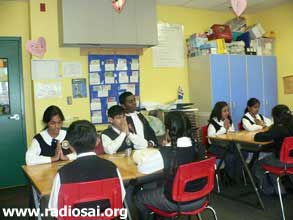
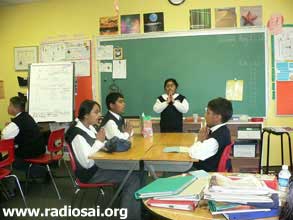
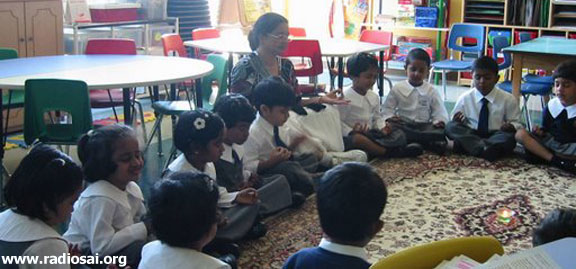
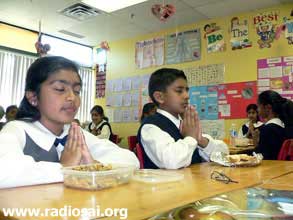
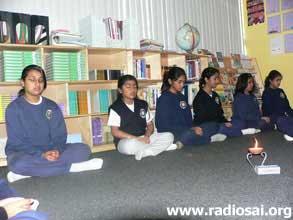
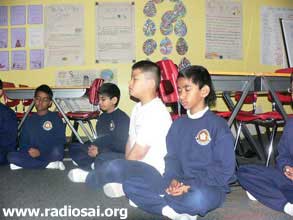
While the great debate on the need for character education rages among educators and decision makers in North America, for six years now, the Sathya Sai School of Canada has successfully balanced academic excellence and character education, carving a niche for itself as a unique private school. Values are unmistakbly evident in the overall climate of the school, and this is because the school has found innovate ways to instill these timeless principles in the young minds. One such interesting concept is the ‘value under the spotlight for a two month period’. Under this program, the ten months (September-June) of the school year are divided into 5 segments of 2 months each, to coincide with the five human values that form the foundation of the school’s Character Education Program.Every two months of the school calendar have a value under focus. During morning announcements, the Grade 2 students who broadcast from the ‘Valueland Radio Station’ read the daily Thought for the Day which is related to the value under spotlight. Following the morning assembly, each class has a tuning-in time where the students and the teacher sit down in a circle and meditate on the light of a candle which they visualize internally and then expand to envelope the universe and all its inhabitants, feeling a sense of oneness with all the beings in all the worlds and praying for universal peace, happiness and harmony. Following the quiet meditation time, students discuss the day’s Thought for the Day and its application and relevance in their daily lives. Apart from Swami’s precious sayings, quotes are also selected from many great leaders, teachers and thinkers, past and present, such as Abraham Lincoln, Martin Luther King Jr., Mother Teresa, the Dalai Lama and even the Berenstain Bears (popular children books with value stories).
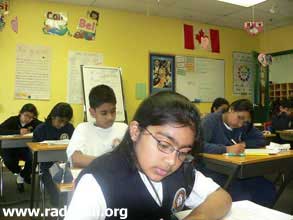
Starting the school day with the first period dedicated to Sathya Sai Education in Human Values sets the tone for focused and calm learning ahead for the rest of the day. While the lessons plans of every teacher from period two onwards conform to the expectations of the Ontario Academic Curriculum, the teachers of the Sathya Sai School of Canada further fine-tune the outcome of their teaching strategies to ensure a values connection.
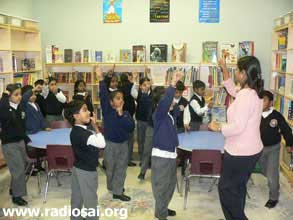
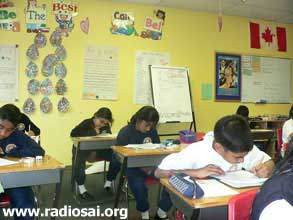
Whether it is a lesson in Math, Language Arts, Physical Education, Social Studies, Science and so on, the teachers plan the lessons, teaching aids, and outcomes from a values lens. In the end, the students are able to make the connection between life experiences and the place of human values in them. Each school year begins with the spotlight on the value of Right Conduct for the months of September and October. This ties in perfectly with laying out the rules and regulations governing good conduct in the classroom, gym, playground, bus and other areas. Team building, cooperation and respect for peers and teachers during group dynamics are some of the important lessons students imbibe early in the academic year, minimizing time wasted on disciplining and conflict resolution during class time.
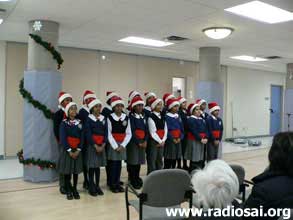
November and December are devoted to the value of Peace, connecting well with the theme of peace on earth. During this season, the school community honours the nation’s World War II veterans on Remembrance Day and they joyfully celebrate such festivals as Eid, Diwali, Hanukkah, Thanksgiving and Christmas. Representatives from various faith groups are invited to special assemblies organized in this connection. Most guest speakers are impressed by the depth of understanding of their faith and its tenets displayed by the multi-faith student body during the question and answer sessions.
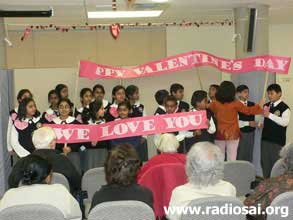
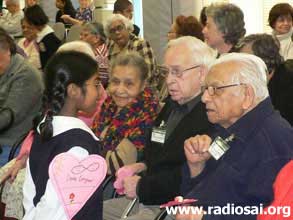
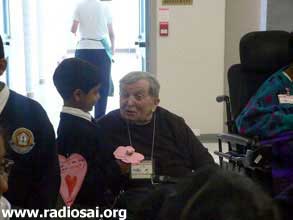
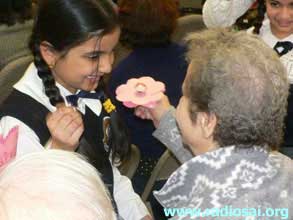
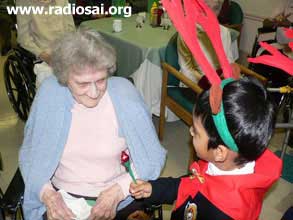
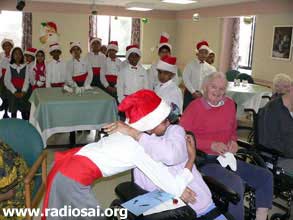
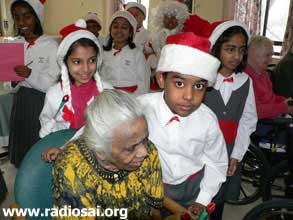
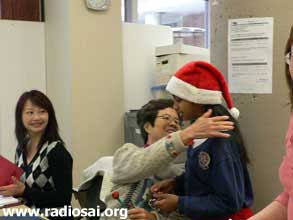
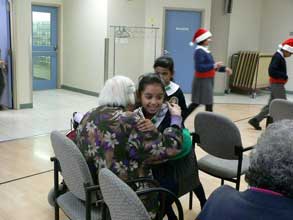
January and February spell Love in the Air, expressed in many different ways. Students replace the rampant consumerism associated with Valentine’s day into a valuable learning experience by visiting and singing value songs at two major facilities that are home to the elderly in Toronto. They bring joy and good cheer to the lonely senior citizens turning it into a truly ‘Valuentine’ experience.
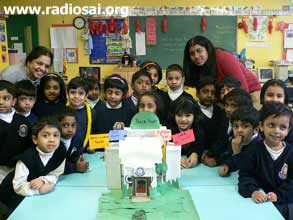
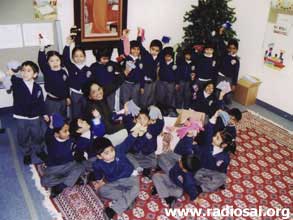
Every year, they also collect over half a tonne of vegetarian, non-perishable food items for the Food Bank used by the needy residents of the city of Toronto. The youngest scholars, the little kindergartners, take over the Christmas tree every January and February and transform it into a mitten tree, decorating it with mittens and warm accessories for the homeless.
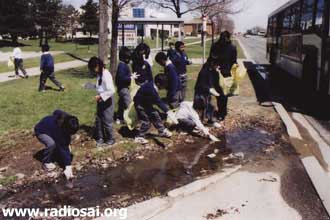
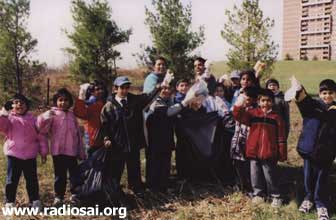
March and April usher hope, renewal and spring, making Non-violence the ideal value of the season. Students participate in observing Lent, Easter and Earth day by cleansing their hearts, minds and their environment. The entire school community participates in the Mayor of Toronto’s call for a 20 minute make-over every year in April to clean up the elegant city by stepping out and picking litter in open spaces around the school and in public parks.
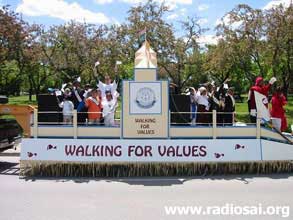
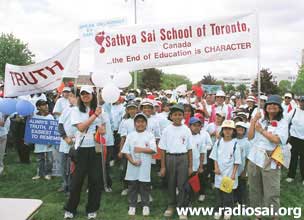
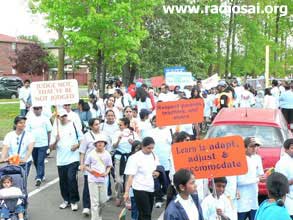
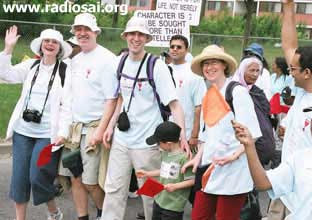
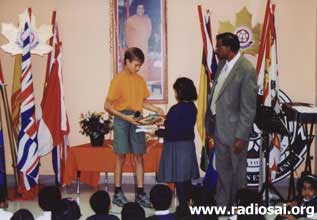
The last two months of the school year, namely May and June, bring the value of Truth to the forefront. This season coincides with the school’s annual Walk for Values, a brain-child of the Sathya Sai School of Canada’s Parent Council. What began as a local community outreach project has now inspired sister events nationally across Canadian cities and internationally in countries as far as Australia.
The Walk for Values this year will be held on June 10 and the staff, students and parents of the school are leaving no stone unturned to make the event inspiring and memorable for everybody, especially the local community. They had a promotion for this event in Dundas square in downtown Toronto on May 27 and will be following this up with another similar event on June 3.
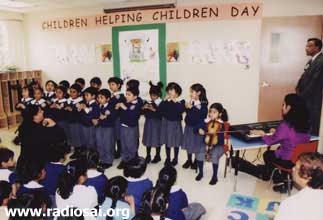
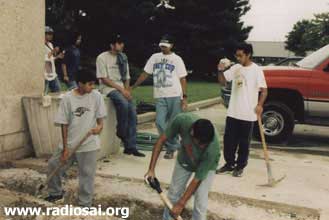
The learning in the school is not confined to only value-based lessons in classrooms, there is also another significant ‘practical workshop’ so to say which is inspired by Swami’s ideals of community outreach service projects. And the kind of virtues that this program instills in young hearts is profound. In bite size servings, customized for easy assimilation, the students learn the priceless lesson of the underlying connectivity that exists behind all manifest life. Several times each school year, students collect vegetarian, non-perishable food items for the Daily Bread Food Bank and visit lonely elderly senior citizens in their lodges at Christmas time and on Valentine’s Day to serenade them by singing value songs and presenting them with hand-made gifts.
By doing chores like the child humanitarian Ryan Hreljac (a Canadian child who at the age of six, began raising money for the world's most needy, and has since raised over $1.5 million for water projects in Africa), they have raised more money than any other school in Canada for water wells in Africa where two wells have been dug in the name of the Sathya Sai School of Canada. They continue to support their adopted sister Murni in Indonesia through the Foster Parents Plan of Canada as well as other disadvantaged children globally by making personal sacrifices and performing extra chores. They are not allowed to seek handouts from family members. Students are excited to participate in various other experiential lessons, having oodles of fun along the way. Says Darini Hariharan of Grade 2:
For Nikita Jariwala of Grade 6 bringing joy to others is the ultimate gratification.
Experiential learning is indeed the key to the school’s successful implementation of the Character Education Program, and the earlier mentioned kindergarten initiative, the mitten tree service project, is one such with sets the ball rolling quite early and has deep positive impact in the students’ psyche.
The students of the school are not the only ones who are being transformed due to the values education. Their parents, siblings and members of extended family too are reaping the rich harvest of the Sathya Sai Education in Human Values program. And in fact, one of the principal reasons for the success of the programme is the parents. Swami says,
It is heartening that the Ministry of Education, Government of Ontario too echoed the same sentiments. Their document ‘Finding Common Ground’ said:
In fact, research shows that there is a clear connection between genuine parent involvement in schools and student achievement. If it takes a village to raise a child, raising him/her upright takes an entire community of people who practice the virtues themselves.
In the Sathya Sai School of Canada, the admission process is as rigorous for the parents as it is for the students. Recalling her experience, Anu Jain, parent of Grade 2 student Alisha Bapoo, says:
In this School, while accepting their child’s admission, every parent has to commit to completing the 15-week Dynamic Value Parenting Workshop within the first year of their child’s enrolment at the School. This is mandatory.
The aim of this program is two-fold:
For a detailed account of the entire 15-week workshops, please click here.
Ron and Beena Mucklestone, parents of Divakshi, Grade 2 and Sumeer, Junior Kidnergarten, are both graduates of the Value Parenting program. They both say:
Now, Ron is also a trained facilitator of this workshop. Another couple, Raanu and Mohan Singh of Toronto are busy parents raising four young children, one of whom currently attends the Sathya Sai School.
Without parents on side, the school knows it cannot successfully implement its Character Education program. It is therefore that the school administrators treat this aspect with lot of care and these parent workshops are conducted always by specially trained facilitators from the larger Sai family, who are, in fact, the backbone of the school. There are also events like Family Nights which are held several times a school year, grade-wise. On these occasions, teachers or invited guests who are experts in their respective fields make presentations to the school parents on topics of concern and interest which range from preparing nutritious vegetarian meals/snacks to the effect of television and computer games on young children as well as responsible internet surfing, enabling study habits and preparing for EQAO exams. This is yet another step to ensure that the school and every home work effectively as partners to help students blossom into beautiful beings.
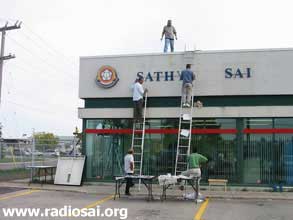
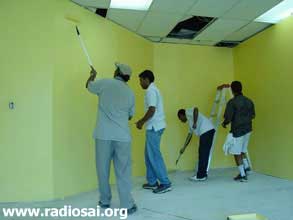
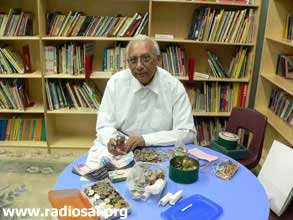
‘Parents as partners’ programme has become so successful that currently one of the most successful outreach projects of the school is in fact a parent council sponsored programme – The Walk for Values, in which over 3,000 people participate annually, pledging to practice a value for self-transformation and the improvement of family and community life. Since 2006, the Walk for Values has become a national event with Sai Centres participating across the country, raising awareness about Baba’s teachings on character and values education, spirituality and morality. This year (2007), the event became international with Australia replicating the novel idea with its own national Walk for Values. To read more about Walk for Values, click here. It comes as a surprise to many that though the Sathya Sai School of Canada with a student population of 160 in eight grades (JK, SK, Gr. 1 – 6) has been functioning smoothly for the last six years, yet till recently, it had no janitorial staff! It was and still is served by the loving hands of many committed volunteers.
From polishing the floors, to vacuuming, mopping, dusting, maintenance of classrooms, washrooms, corridors, gym, playground and school equipment… all cleaning and secretarial services are provided by men and women who operate with clock-work precision, according to their assigned schedule and undertake these chores as a part of their personal discipline. While many volunteers are grateful school parents, others are members of the Sathya Sai fraternity across the Greater Toronto Area, all committed to the highest social and civic ideals befitting responsible citizenship.
The grateful school community consists of students, their families, staff, Trustees, the Sai Organization of Canada and scores of selfless volunteers, friends and supporters who work during and after school hours and behind the scenes to ensure its smooth and seamless running.
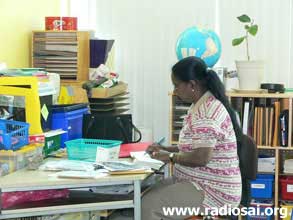
Three retired Ontario teachers Mr. Chetan Ahooja, Mr. Mohinder Kapoor and Mrs. Vinay Nehru are volunteers who run the school’s Technical Studies Program, teaching computer applications to students from Senior Kindergarten to Grade 6. Mrs. Vinay Nehru explains her motivation for driving a fair distance to report for work :
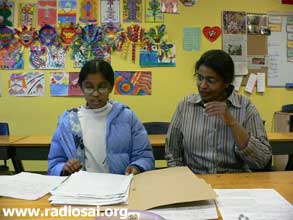
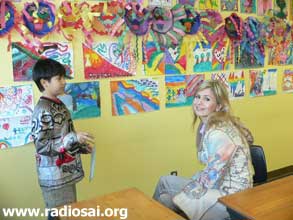
Loved by her students, Mrs. Sangeeta Rajwani is the school’s highly creative Visual Arts volunteer teacher. She has been with the school for seven years now. Describing her experiences, she says,
It takes many hands, hearts and minds and thousands of man-hours of hard work to make this beautiful school happen. Yet the common energy that propels everyone involved to such altruism and selflessness is the powerful personality of Sri Sathya Sai and His compelling example of boundless love.
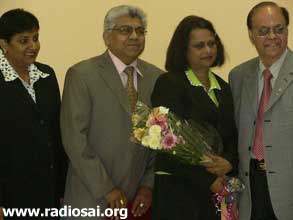
Every act of service performed at the school is an expression of gratitude to Swami for His gift of this institution to Canada, a project that has now become a personal legend for each individual involved with it. To be associated with an institution that bears Sathya Sai Baba’s sacred name is a blessing and a responsibility that no one ever takes for granted. The President of the Sri Sathya Sai Education Trust of Canada, Mr. Dayal Mirchandani sees the school as “An ideal opportunity to unite all those who share this sacred vision of a contemplative, values-based model of education. When we work in unity for a greater cause, not only the students, but everyone involved experiences a spurt in inner growth.”
What makes the Sathya Sai School and every Sai project around the globe so sacred is that everyone and everything involved is directly inspired by Swami and His selfless nature. Like His life, Baba’s service projects come without any catch, fine print, strings attached, hidden agendas, expectation of gratitude or publicity of any kind.
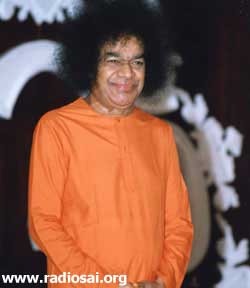
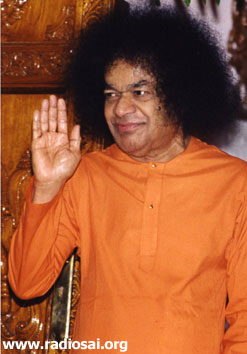
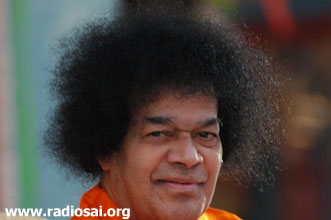
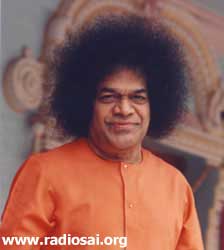
Though always not apparent to all, Swami is, in fact, the life and soul of this hallowed school. He, is in fact, their perfect role model and hero. One day, each of them aspires to be as loving, selfless, caring, compassionate and wise as He is. The students know it is a privilege to wear a uniform that bears the crest of His unique school, which many of them describe as a temple of learning.
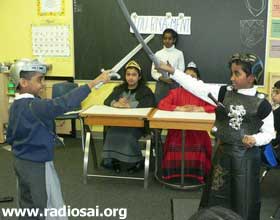
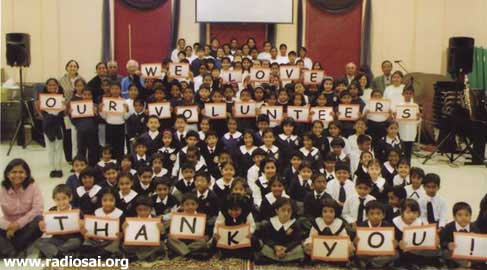
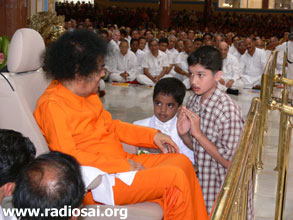
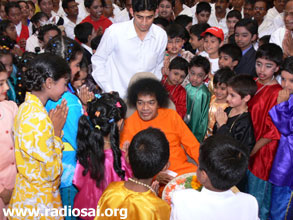
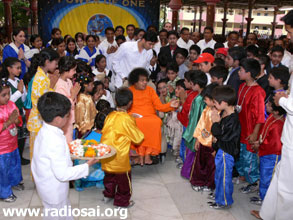
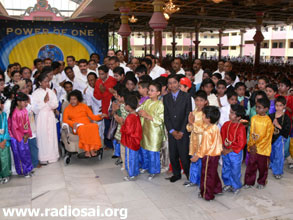
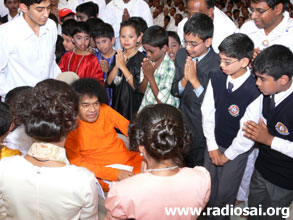
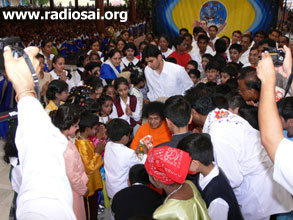
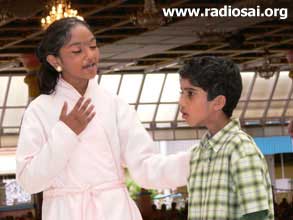
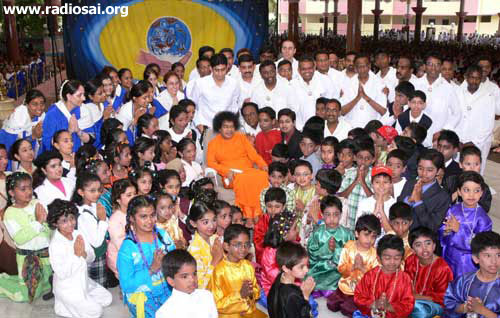
Much of the student population has never met or seen their beloved Founder in person, yet He looms large on their emotional, mental and spiritual radar as a beacon of all things good and positive. Many saw Him for the first time when they came as a big bubbly group to Prasanthi Nilayam in July 2006 to have the rare chance of seeing Him, hearing Him, talking to Him and also presenting a drama titled Power of One. That is when Saivijay Bhat of Grade 2 “Knew that our Founder loves His students where ever in the world they may be. I am very happy and thankful to be a student of the Sathya Sai School of Canada. “ To read the detailed report of this drama from H2H archives, click here. What touched Grade 1 student SaiSwaran Manorathan the most was the opportunity to hear His voice. “I heard Baba speak for the first time in person. Baba has the sweetest voice in the world. I know He always tells us to speak softly and sweetly. He speaks softly and sweetly Himself!”
Describing the ashram vibe, Saiprashani Jeyandran of Grade 2 says: “The atmosphere in Puttaparti was very quiet and peaceful. I felt very powerful and gained spiritual guidance. I actually touched Him gently by keeping my hand on His leg. That touch made me feel powerful and blessed.” Ganash Sai Vannithamby of Grade 2 is a confident actor who got to say some powerful lines to Baba up close and personally. Recalling his good fortune, he says, “Looking straight at Swami, I said ‘I am Sat, Chit, Ananda’ (Awareness, Consciousness and Bliss) with a lot of force and confidence. It was a great feeling. Then the most important time came… My heart was beating so fast. I walked with the garland towards Swami. Swami touched my forehead. I really don’t know how to explain my joy during this most precious moment. Even now, I feel His touch on my forehead every time I think about Swami. I believe Swami really and truly loves me and accepted me as His child. I really am the luckiest kid in the world.”
Prem Sai Ramani, now a school alumnus, treasures his own precious memory. “There sat Swami, staring at us, sharing His love. It was bliss. You could feel His power like a fireplace heating up a room. I looked up at Him for every line I said, and whenever I did, He smiled, smiling a Swami smile. It was one of those half smiles. I can see that smile right now. It was a beautiful smile. It was the highlight of my trip. Today, I still think of that smile. And I think of that experience, the experience of a lifetime!” Each student relates to Swami in their own way. For Prashant Munshi of Grade 1, “Sai Baba is Love, Truth, Right Conduct, Peace and Non-violence. On July 13, when we performed in front of Sai Baba, I didn’t take my eyes off of Him even for a second. After the Grand Finale, He asked me my name. I said “Prashant”. I felt very, very happy. I felt as though I had fainted and my spirit just went out of my body and I felt very good. I was filled with love. My gift for His love is that I will never get into any bad habits. I will remember Him and chant His name and I will always keep Him in the centre of my heart.”
Grade 4 student Phillip Hannides’ spiritual odyssey began “Even before I arrived in India, I felt love coming from our Founder. I knew nothing would go wrong because Swami was there and He would protect me. I felt like I was going to have a good time there and felt very loved. “When I arrived in India, I already felt Swami’s energy radiating through my heart. When I saw our Founder for the very first time, I felt very special. I realized He is always watching over us and guiding us.”
His brother Nikita Hannides of Grade 6 received a life lesson during the play. He recalls:
Saeejith Nairof Grade 3 returned inspired to live up to the name of the character he played in front of his Founder. “Now, my challenge in life is to become an earnest person and a good human being, like the character Ernest that I played in the drama. With His love and His teachings to guide me, I know I can do it.” It was a close tryst that Ganesh Naidoo of Grade 5 will never forget . “When I touched His feet, I felt an electric shock or energy shoot up my hand. I also felt really warm for a little while after that. I was surprised that I wasn’t nervous or scared to perform for our Founder. I think that is because I consider Him as an incarnation of Love and a wonderful leader,” he remembers. For Grade 6 student Raajat Gupta, the experience of being within Baba’s aura was fascinating. He says: “Every day, when our Founder passed by me, I could feel an uplifting feeling in my heart, as if all my burdens were gone. But that’s not all. After performing the play, when He came to take pictures with us, I got to touch His feet. The experience was amazing and simultaneously gave me an incredible energy surge. It was as if a bolt of lightning had struck me. I felt as if good qualities had replaced any bad habits. I felt perfect. That one moment, I will cherish forever!”
An accomplished actor,Sindhura Thirumal of Grade 5 landed herself the lead role in the play. She took it to heart and gave it her all and received so much more. She reflects:
Whatever their equation with the Embodiment of Love, Sri Sathya Sai, all students of His Canadian school enjoy an indescribable and special relationship with Him. Their pure hearts are drawn to the warmth of their beloved Founder whose generosity and loving care provides them with such a nurturing environment to learn and grow.
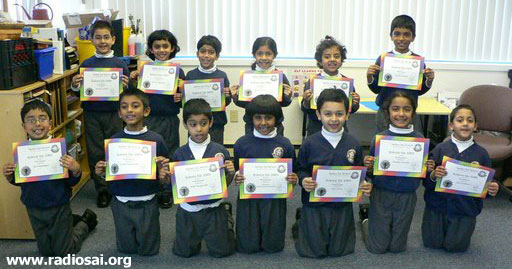
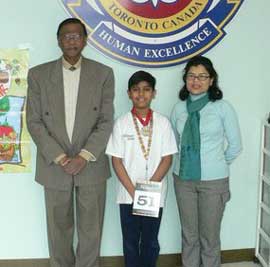
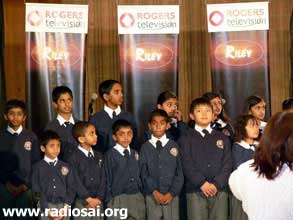
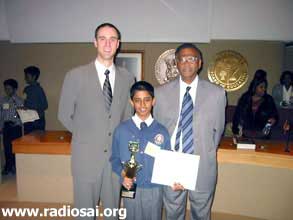
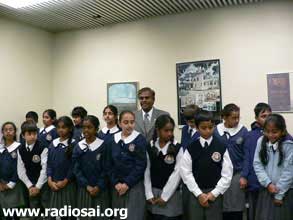
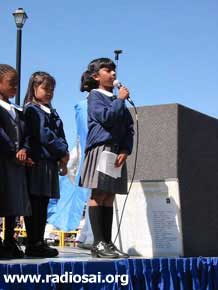
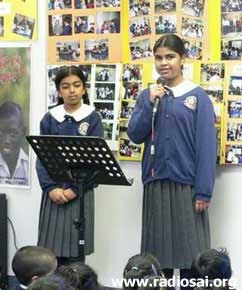
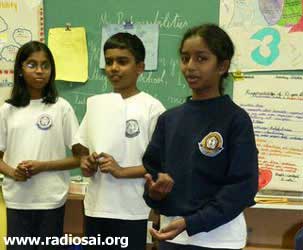
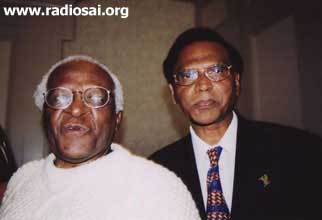
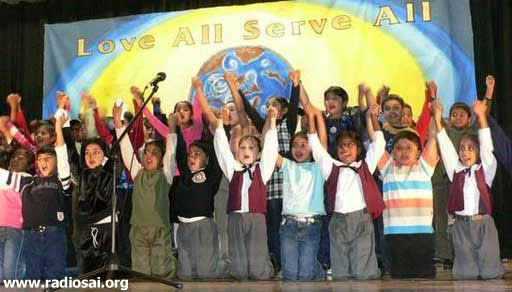
Given their outstanding behaviour and excellence in academics and extra-curricular activities, it is no wonder that the students of the school have won many awards and accolades, but what is more important is that all these laurels have gone a long way in raising awareness of the importance of values and character education in their community too. Their keen sense of engagement, discipline, public speaking and singing skills endear them to people wherever they go. They have addressed rallies and assemblies on the place of the five human values in their lives, which include an Inter-faith prayer after the World Trade Centre tragedy and a welcome dinner for the Nobel Peace Prize winner Archbishop Desmond Tutu and various other community and political forums. At various Spelling Bee contests, students continue to secure top positions in both the Senior and Junior categories each year. This exposure has resulted in self-assured, eager to learn, calm, model students, often wise beyond their years.
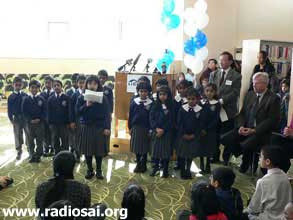
From time to time, students from the Faculties of Education from the University of Toronto and York University visit the school to observe the Sathya Sai School model as part of their research on alternate schools. This is what two B.Ed. students, who spent some time in the classrooms experiencing the life in a typical day at the Sathya Sai School of Canada for a week, said: “The impact of positive encouragement from the teachers demonstrates the well-behaved character of the students. Having visited various classrooms, I am impressed with the integration of the curriculum and the five human values. As a future educator, I hope one day I will be able to be a part of this dynamic institution.” – Meron Keleta The character education program is “something extraordinary and so complimentary to the emotional development of children.” – Sumi Arif Upon return to their school, the teachers held an exhibition on the unique Sathya Sai education model. In their email, they reported, “We presented Sathya Sai School for our alternate school awareness storefront at York University Keele campus on 13th April. Our professors and classmates were amazed. They all said this school is unbelievable, unique and extraordinary! We presented all the information in a seminar and made a poster for the storefront. Twenty five alternate schools were presented on that day by our classmates. Sai School is now on the York University’s list of best alternate schools.” A local librarian was so impressed with the good behaviour of the Sathya Sai students in her library that she insisted the school call a meeting of parents in her library so that she could tell them how special and different and well-behaved Sathya Sai School students were. At her request, the school held one of the school-wide Family Nights at the Toronto Public Library where Mrs. Linda Kennedy shared her admiration of Sathya Sai School students with the parents of the school. Upon hearing of the school’s stellar academic performance in the media in February this year, Mrs Kennedy wrote: “It was so wonderful to see that Sathya Sai School is considered one of the best in the country! Having worked with students and teachers since the school's inception, I have the greatest respect for Sathya Sai School and have always felt that it is the best school I have ever known! The teachers and students have been a joy to work with. The students demonstrate academic excellence, but what really stands out about them is how full of love and empathy they are. They will change the world with their example! Your top standing is well deserved. It has truly been an honour to work with such a wonderful school. Congratulations!”
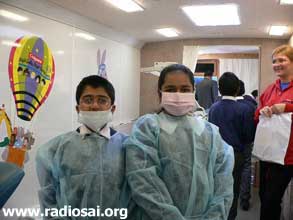
The peaceful atmosphere in the school draws the awe of even the most casual visitor to the school, be it the locksmith, or the mail carrier from Canada Post who once spontaneously commented, “It feels awfully nice in here…unlike any school I have ever delivered mail at.” A gentleman who drove a mobile dental hospital for a special Brush-o-mania assembly two years ago, walked into the school premises and wept because of what he described as “A self-cleansing experience … I feel my soul has been washed here.” [The Brush-o-mania is an annual event organized by Rotarians in which the every student of the school participates. The students get a guided educational tour of a mobile dental van and learn about dental hygiene integrated with human values.]
The professional school photography company Lifetouch Canada that comes for the annual picture day routine is also pleased with the discipline of the children. Every year the photographers comment on the smoothness with which they are able to accomplish their job at the Sathya Sai School as compared to other schools. The manager had once vowed that if she ever had a child, this was the school she would send him/her to. Sathya Sai’s love energy pervades the atmosphere palpably and is evident in many ways, including the unusual phenomenon of the ‘ growing garland’ - the lovely garland on Baba’s photo that has mysteriously grown longer to unimaginable lengths, sometimes double the size on rare occasions.
To read more about the “Growing Garland story’, click here. The growing garland for the school is a potent symbol, latent with valuable lessons. The common thread that runs through the diverse petals tying them into a whole, symbolize the underlying sap of life that runs through all diversity connecting everyone and everything in the universe. Many see it as a symbol of the growing influence of the school’s values-based Character Education program in the community.
One parent who is all too familiar with the school’s loving environment is Irina Visotskaya whose children Nikita Hannides and Phillip Hannidesattend Grades 6 and 4 at the Sathya Sai School. For Irina, “God is Time. God answered our prayers at the hardest time of our life. A few months after my children had joined the school, their father passed away. The love and support we received from everyone at the school was so heartwarming and exactly what the boys and I needed at that time. God’s love is so amazing! He takes the world away but gives His immeasurable, unconditional love instead…in our case, God washed us with an abundance of this love through our association with the school community…Learning your true nature by practicing love is what the Sathya Sai School of Canada teaches.” For Grade 2 student Sindu’s parents Lini and Jeyapalan Rajalingam, this wisdom is quite apparent: “Day in and day out, we find that Sindu is learning and growing a lot as a student of Sathya Sai and is also teaching us life lessons. Sometimes, he comments on our behaviours when we least expect it and those comments are profound and very meaningful that you would not otherwise hear from an average seven year old.”
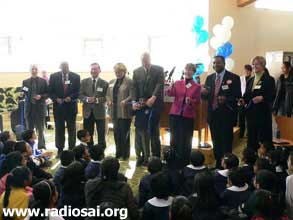
As part of its efforts to create awareness about values among educators of other schools and institutions as well as members of local community, on March 23, 2005, the Sathya Sai School of Canada sponsored a National Symposium on Character Education, followed by a Four-Day Workshop presented by Carole Alderman of the British Institute of Sathya Sai Education in which nearly 100 teachers and community workers participated. According to Dr. M.V. Kanchana, the National Education Coordinator of the Sri Sathya Sai Organization of Canada, “The Workshop and Symposium were well attended by teachers showing interest in the integration of values in the curriculum. The presentation made by the teachers of the Sathya Sai School, at the symposium, provided a model for integrating values in the existing curriculum. The message was very well received and appreciated by the educators who attended the symposium. The symposium stressed on character education as the key to deal with the decline in the moral values, growing violence and drug abuse among children and society in general.
To read the media report on this symposium, click here. “To take the effort to its next logical step, the Sathya Sai School also hosted a 4 day workshop on Character Education for teachers, again free of cost, over the Easter weekend. One hundred participants, many of whom are educators, from all over Canada, attended the workshop conducted by Carol Alderman, the Director of the British Institute of Sathya Sai Education. All of them went home well equipped with the necessary tools to implement SSEHV in their respective places,” adds Dr. Kanchana.
Carol Alderman has extensive experience in training teachers in the UK to organize their daily lesson plans, learning activities inside and outside the classroom from a values perspective. Participants from across Canada attended the workshop to learn ways to integrate the universal human values, through song, story and hands-on activities, within the daily academic curriculum. The Summer Camp was one of the first initiatives emerging from the Character Education Symposium and SSEHV Workshop in March 2005. One hundred participants had received training in the SSEHV program and as a result, members of the Sai Organization under the guidance of the Principal and Staff of the Sathya Sai School of Canada were well prepared to take it into the wider community. The request to conduct an EHV Summer Camp in a public school came immediately after the symposium from the Principal of Brookview Middle School that is situated in a low-income area in Toronto. It was the opportunity the Sai Organization was waiting for, and the timing was perfect. In her appreciation letter, the Principal wrote:
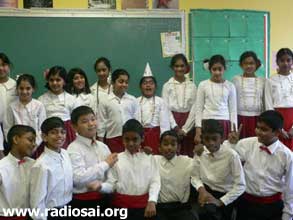
To learn more about what happened at the camp, click here. As a result of the camp, the Principal of Brookview Public School invited Mr. T.R. Pillay, the then Principal of the Sathya Sai School of Canada to speak to her staff on Character Education at her school’s professional retreat in August 2005. He was accompanied by the teachers of the Sathya Sai School who presented the public school teachers with practical ideas on how to integrate values into the Ontario curriculum. These presentations were well-received. British Columbia based school Trustee Dr. S.V. Evani described the school that binds the devotees of Swami across Canada, from the Atlantic to the Pacific coast, as “The crown jewel of the Canadian Sai organization”. And how true it is! It is in fact, a beacon of light, committed to revitalizing timeless values. Today, the Sathya Sai School of Canada has emerged as the learning ground for all stakeholders, young and old, who treasure it as Sathya Sai’s priceless token of love to Canada. For the group of 333 which included school students, staff, trustees, volunteers and their families, who traveled to Prasanthi in July 2006 to express their gratitude to Swami, though their presentation “Power of One”, Sai is the ‘Only One’ soul and goal of their lives. July 13, 2006, the day when Swami witnessed the drama remains etched in gold in the annals of the school’s history. The geographic distance between Prashanthi Nilayam and the school in Toronto might be huge, but that does not dampen or diminish the warmth and the spirit of pure love that everyone and everything at this special school reflects. Every morning, future world leaders, arrive at the Sathya Sai School of Canada, looking bright in their neat uniforms, ready to allow the infinite goodness within them to unfold. Many of them are too young to realize the many vital responsibilities that await them as the harbingers of a brave new world order, one where the human values will govern all fields of life. Also unknown to them is their imminent and good fortune to usher in a new age where entire humanity will realize the oneness and sacredness of all creation, thereby fulfilling the prophecies that reflect humanity’s highest aspirations. With complete confidence in the validity of the organic values that make it so unique, the Sathya Sai School of Canada is forging ahead, pioneering the integration of Character Education with Academic Excellence. It is focused on promoting human excellence by raising good, wholesome future Canadian leaders and global citizens, instead of merely great whiz kids.
Kumaran Subendran of Grade 4 is one such future leader. He joined the school in Junior Kindergarten. He is already concerned about his graduation coming up in two years. “I will miss my beloved school, my friends and the most loving teachers. It is the best school ever. I hope to take the values in my heart wherever I go. I will be a leader and help others. I will not use bad language and hurt anyone. I will show compassion and be a good role model, just like my teachers here. To inspire others to follow my example, I will have to let go of my bad qualities. I will continue to work and improve my character and in the coming years, I will possess the qualities of a good leader and role model."
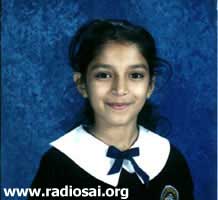
Prarthana Tirikollur, of Grade 6, will be completing seven years at the school in June when she will graduate and join the public school system. Her take-away from her school experience, is a boost in self-confidence, the most vital ingredient in a person’s character. “We are amazing people and we are capable of anything. I know that no matter what, I will always stay special and I know that no one can ever change that. I know that I am perfect the way I am. When a person has confidence, the universe will change its way to yours. It is wonderful. I know for sure, God has made us for a purpose and that purpose, only we know. I will be ready to face the world and its ways and I know in my heart that I can achieve anything as long as I stay rooted to my practice of the five human values.” Drawing guidance and inspiration from its matchless Founder, universal teacher, Sri Sathya Sai Baba, the school community is looking forward to further growth, both within and without, to achieve greater success. The school aspires to be a model of holistic learning in North America, growing to a middle and high school. Some parents hope that one day it will become the Sathya Sai University of Canada, just as Sathya Sai Baba said on 17 November, 1999: “start small and grow big” for it is His school, a school He has blessed! As Prarthana echoed the sentiment so prophetically, when we have confidence in our vision, the universe will change its ways to ours, and luckily for those, who have experienced the impact of the Sathya Sai School of Canada, there is no dearth of trust in the Power of One that started it all! To know more about the school, please visit www.sathyasaischool.ca Author: Ms. Karuna Sarup-Munshi, currently works as the Office Administrator at the Sathya Sai School of Canada. She is a Gold medalist in M.A., Philosophy from the Anantapur campus of Sri Sathya Sai University . An experienced journalist, she has also worked in the social justice movement. Dear Reader, how did you like this cover story? Was it inspiring? Did it help you in anyway? What suggestions you have for future cover stories? Please let us know at h2h@radiosai.org. Thank you very much for your time.
|
|
|||||||||||||||||||||||||||||||||||||||||||||||||||||||||||||||||||||||||||||||||||||||||||||||||||||||||||||||||||||||||||||||||||||||||||||||||||||||||||||||||||||||||||||||||||||||||||||||||||||||||||||||||||||||||||||||||||||||||||||||||||||||||||||||||||||||||||||||||||||||||||||||||||||||||||||||||||||||||||||||||||||||||||||||||||||||||||||||||||||||||||||||||||||||||||||||||||||||||||||||||||||||||||||||||||||||||||||||||||||||||||||||||||||||||||||||||||||||||||||||||||||||||||||||||||||||||||||||||||||||||||||||||||||||||||||||||||||||||||||||||||||||||||||||||||||||||||||||||||||||||||||||||||||||||||||||||||||||||||||||||||||||||||||||||||||||||||||||||||||||||||||||||||||||||||||||||||||||||||||||||||||||||||||||||||||||||||||||||||||||||||||||||||||||||||||||||||||||||||||||||||||||||||||||||||||||||||||||||||||||||||||||||||||||||||||||||||||||||||||||||||||||||||||||||||||||||||||||||||||||||||||||||||||||||||||||||||||||||||||||||||||||||||||||||||||||||||||||||||||
 Myth or Fact?















| You can write to us at : h2h@radiosai.org |
Vol 5 Issue 06 - JUNE 2007
|
Best viewed in Internet Explorer - 1024 x 768 resolution. |